
Tag Archives: photo essay

Fistful of Dreams E-book


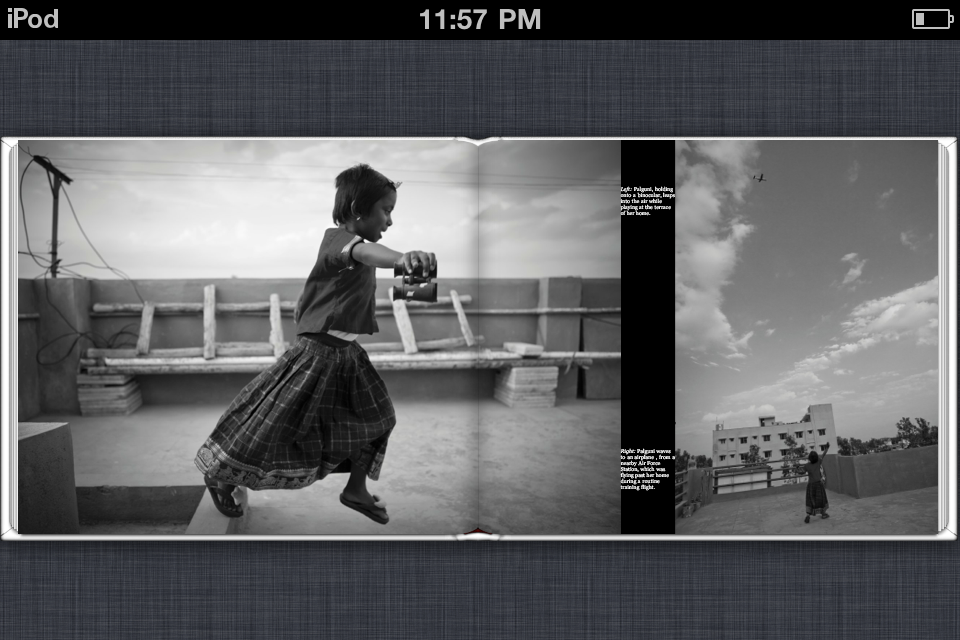
Screenshot of a page from Fistful Of Dreams E-book as seen through Apple iBooks on an iPod.

Fistful of Dreams has undergone a long journey and evolution since the story made its way into the public domain. It originally began as a multimedia presentation that went viral on social networks and internet, reaching out to a huge audience. Then it moved to a classical medium of a printed book.

All along this journey, it went to true public platforms and events like Open Shows (Bangalore and Hyderabad) and Delhi Photo Festival, where I was present to directly interact with an audience as I presented the story of the five-year-old Palguni.

Soon after the release of the first edition of Fistful of Dreams book on blurb, a lot of queries came to me from friends, family, followers of my blog, and general public, if there was an e-book version of Fistful of Dreams available for e-book readers like kindle, or for tablets like iPad. Their reasons for the need for an e-book varied. Below are some of the reasons that I got along with the requests for an e-book:

  1. Printed on-demand photo books are expensive (I am working on an alternative to get Indian edition of the print. But it will be a while before it happens).
  2. They have stopped buying printed works.
  3. They have invested on e-book readers/tablets.
  4. They are into “less use of paper” philosophy.
  5. They want to support my work, but buying books to support my work is slightly above their budget.

And so on. After a lot of trial and error, trying to design books for local markets, and feasibility study of making PDF e-books, I realized that blurb.com had finally embraced the e-book revolution that changed the dynamics of publishing world. Blurb finally launched the e-book versions for Apple iPad tablet, iPhone and iPod. It has allowed authors and photographers like me to reach a newer audience who prefer books in digital format. This given a boost to self-publishing and has further democratized the publishing  business.

As a result, I finally launch the digital edition/E-book of Fistful of Dreams. Currently, it is available for iPad, iPhone and iPod only. But, I hope I’ll be able to reach more platforms soon.


A view of bookshelf in iBooks app on an Apple iPod that shows 'Fistful of Dreams' e-book on the top left corner.

Best thing about the e-book is that it is low-cost, and hence affordable by people who wanted a copy of Fistful of Dreams but couldn’t afford the printed version. The book is priced at US $5 . 99 only (5 dollars and 99 Cent ) with no additional hidden costs. It can be downloaded immediately after the transaction on blurb.com.

So do buy the book, or gift it for someone who has an iPad/iPhone/iPod and would love to have Fistful of Dreams or be benefited by the story. Click here for the direct link to the Ebook on blurb.


The page on blurb where E-book option can be selected instead of printed version.

Below is a small preview of the book.

Steps mentioned on Blurb.com to download the book to iPad.

a) Start by making sure you have iBooks installed on your iPad or iPhone.

b) Download using either your (1) iPhone/iPad or (2) your Mac/PC:

  1. Your iPad or iPhone:
    • In Safari go to Blurb.com, sign in to your account, and then go to the book details page for your book.
    • On the right-hand side find the button that says Get ebook for iPad, iPhone, iPod.
    • Choose Download for iTunes from the drop down. (A progress bar will appear at the top of the screen).
    • After the file downloads choose “Open in iBooks” to open the file. Getting an error message? Make sure you have iBooks first!
  2. A Mac or PC:
    • Go to the book details page for your book.
    • On the right-hand side click Get ebook for iPad, iPhone, iPod.
    • Use any of the four options to load your ebook
      • Text message – Open this message on your iPhone and tap the link. After the file downloads choose “Open in iBooks” to open the file.
      • Email – Open this email in the iPad mail client and click the link. After the file downloads choose “Open in iBooks” to open the file.
      • QR code – Use a QR reader to open the link. After the file downloads choose “Open in iBooks” to open the file.
      • Download for iTunes – Click this to download your ebook to your computer to manually add to your iTunes library.


(Note: If you like my work, then please do share the link to this website with others. Also, if you’d like to support me in my projects, then feel free to click the ‘flattr’ button at the bottom of the post. Flattr is a social micro-payment system. )

flattr this!

Posted in Blog, Photojournalism | Also tagged , , , , , , , , , , , , , , , , , , , Leave a comment

Making of a Documentary Photography Project
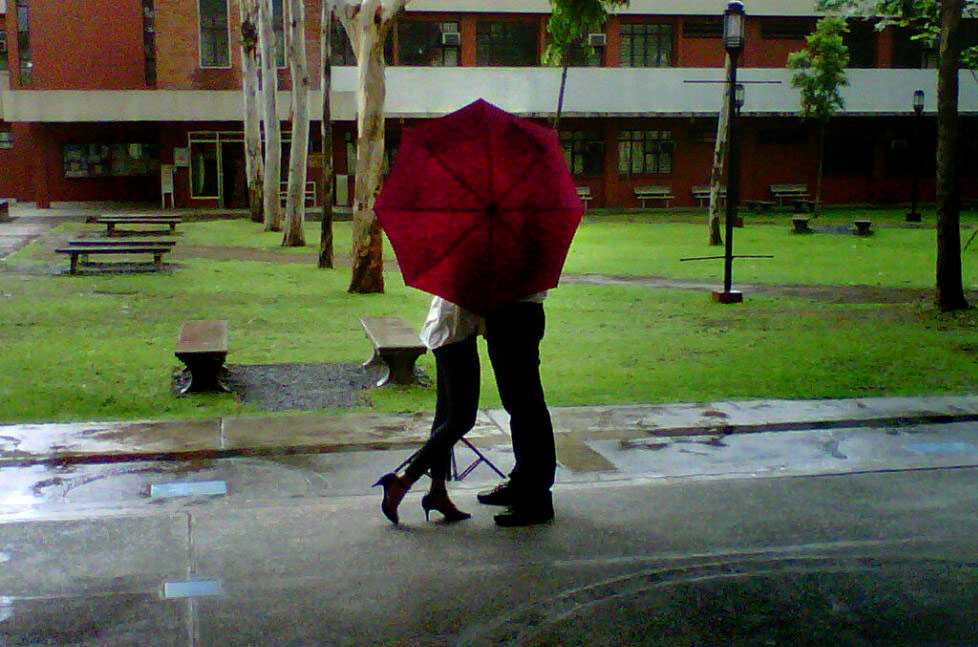
 

A mobile phone photograph of a young couple during a pre-wedding portrait shoot done at Ateneo De Manila University campus, while we were defending our final projects in front of 3- member panel. May 2011, Manila, Philippines. © Nishant Ratnakar

In the beginning of this month, I was invited by my Alma mater, Konrad Adenauer Asian Center for Journalism (ACFJ) at Ateneo De Manila University to join in an online discussion with the current batch of students pursuing the Diploma in Photojournalism. The year-long Diploma is a with a mix of both online and on-campus classes. One of the best photojournalism programs in Asia. I’d recommend it to anyone serious about visual story-telling.

The discussion was an asynchronous Q & A session. My work Fistful of Dreams was presented by the teachers to the students. And the Q & A revolved around my philosophy, approach, technique in accomplishing this project.

I share here the introductory post, and the subsequent discussion I had with the students, the emerging young photographers of Asia. (Matatag Na University!)

I hope the presented discussion could be of help to students of photojournalism, or people interested in Visual Story-telling. I’d be glad to answer any further questions.

Intro Post

I am from a predominantly brown-skinned nation, India. A little known fact about India is that it also has a significantly sized region (North Eastern India) where the population’s race resembles the generic South-east Asian population, or even the Mongoloid looks of most Asian countries. But this population is a minority in comparison with India’s total population of 1 billion people. The diversity that we celebrate here, also leads to bias and stereotypes between the races.

We also have a history of being a colony of the British, our white-skinned rulers. Perhaps, the hegemony by our European colonizers laid foundation to the brown-skinned nation’s fascination with the white skin.

With this background, I state my personal connection to the subject. I come from a family, where I am dark-skinned and the rest are fair-skinned. As a child,  I used to hear people say (harmless jokes) that probably I was exchanged while I was born, or adopted and hence I should behave myself:). This trick worked to scare me. And these were the early introductions to the national stereotypes associated with being dark.

As I grew older, I began to notice how the white skin as a symbol of purity was  endorsed by popular figures. Cosmetic industry revolves around the quest of turning brown to fair. I also noticed, how derogatory terms were coined to represent races and skin complexions that deviated from the accepted norms of “good looks”. These are silent crimes, and the population is in denial about it. Law fails here. Only a change in mindset could work towards eradicating prejudices.

As a photographer, story-teller I always wanted to tell this story someday…

At the same-time, while exploring story ideas as a social documentary photographer, I stumbled upon the facts of gender discrimination in India – How the sex-ratio in India was skewed. And alarming sign was that number of girls in the age group between the 0 to 6 years was reducing over decades. This decline clearly indicated that girls were prevented from being born(sex-selective abortion or female foeticide), or killed soon after birth(infanticide), abandoned (left to die or abandoned at orphanages). These are silent crimes too. And here the laws seemed to fail again.

There were many reports and stories on these crimes. But most of them revolved around numbers and statistics. And statistics always told that “50 million girls” had gone missing from Indian population through the silent crimes. There was a face missing to this number… probably a face that could help in changing mindsets of the people.

That’s when I came in touch with Veena, again.

I had first met Veena years back. Her first adopted daughter was only five-years-old then. I had noticed how their contrasting skin colors drew attention from the general population (including me), that were seasoned to see families that resemble, live and behave according to accepted norms of the society. Fair-skinned, single mother, and an adopted daughter, seem to deviate from the accepted norms.

When I met Veena this time, she was going for a second adoption. And finally she had found Palguni, who also is another dark-skinned girl just like her first daughter.

With Palguni, I finally found the face that represented the “50 million missing girls”. Also, if being born as a girl was not enough, she was also part of the population which was dark-skinned, something that I could understand(Very important… if i cannot understand the subject, how can I ever tell the story? I don’t understand the complexity of Iraq or Libya, so I better not go there for now.)

I now had a way to discuss the two conflicts, gender and race, in one story.

After my return from the first on-campus session at Ateneo, I met Veena again. I discussed with her my intention to document her family, and my objectivity. She was convinced. And the rest is what you now see on my website.

I would like to mention that for the one year I followed them, I had spent little time shooting and more time getting to know them. My understanding of the subject increased during this period. I was an embedded journalist in this project. My objectivity was to present their perspective, and I am clear about it. It meant even reading books, playing with the kids, listening to them, and even cutting apples at times… When I was free from these chores, I shot photographs.
Questions open to the floor.

Q&A

Hi Nishant! You’ve got really nice work. A sensitive and poignant topic well depicted through an essay. I understand that the topic is something close to your heart. But how did you handle it? What should be the photographer’s relationship to the subject matter? There’s a particular photograph in your the essay. It’s of Veena giving a body massage to Palguni. It is tremendously powerful, very moving, because I think it captures something that has to do with the way you work. - Loy Lagrade

Hi Roy. Good question. Relationship between photographer and subject-matter.

I work with a daily newspaper, where the mantra is the traditional journalism parlance of objectivity and balanced perspective. It is based on two assumptions:

  1. 0 % bias is possible.
  2. 100% neutrality is possible.

It is debatable whether such an ideal scenario is possible. In your class on “Visual Literacy”, you’ll learn more on it. So I shall not get into much details of it. But, the gist is that, “what we see”, “how we see”, and “why we see” have solid reasons behind it. So the benchmarks may not be attainable.

Also, my personal experience is that I cannot get to the heart of the matter with this approach. I may only state the “obvious” and report it. There is too much of a distance between the subject and I (photographer). The danger is – “What is under-reported may never get reported at all…”

So, I embedded myself into the family.

Embedded journalism brings out newer/alternate/under-reported perspectives. So my objectivity is to bring out these perspectives.

Ateneo De Manila press had released a book on “Best Practices of journalism in Asia.” The book was given to us during the 10th Anniversary of ACFJ. The book also suggests that the embedded reporting style, is one of the best practices to be followed in developmental journalism in Asia.

On the contrary, this style also has its own critiques. Some suggest that you can get lost with sympathy for the subject. But, as I said earlier in one of my posts – Objectivity here lies in being honest on what you are trying to achieve. I am clear that I am bringing out the perspective of my subjects – a perspective that gets little attention in the mainstream.

So, I work closely with my subject. Very intimately at times. The picture you referred to, is precisely a result this kind of work.

My relationship with the subject does cross borders defined by traditional practices. In this story, I am a friend to them. But, by being a friend to them, would it mean that I’ll lose my sense of judgement? I believe I won’t. And it is a risk which this style of work requires.


Thank you for the answer. I want that book as well:). Correct me if I am wrong but your approach or your style here has resemblance to “classic” photographs or essays. Why? Isn’t getting “ modern” good enough to regain attention and leave a message as well?

- Loy Lagrade

Hi Roy. I am not sure what exactly you mean when you say “modern”. By  modern, are you referring to conceptual photography?

If so, I have no issues with conceptual work. Lot of photographers do conceptual work. And commerce of photography says that “conceptual” photographs sell in very well in gallery:). It also does send messages across. All styles send messages across with strong images…

When it comes to my style of work, I believe that I am a story-teller. And classical story-telling style comes naturally to me. I believe I am more effective in this style. And in this particular story… I am trying to foreground “larger issues” by telling “individual stories” of people. So naturally, this project requires a story-telling approach.

You should probably analyze what style suits your final project.  If modern conceptual work suits it, then go for it. Else, stay classical.

For modern style, do take a look at Cosplay project done by Aileen Camille B. Dimatatac, my batch-mate at ACFJ. Her work was conceptual portraits.


Hi Nishant  :)  I am Mark. How did you come up with the title “Fistful of Dreams?”

- Mark Lester Cabayab

The story is about identities – about being a girl, or about having dark skin. It is about acceptance and being allowed to be yourself. This is isn’t about issues that don’t generally don’t make it to the front page news.

This story is about being loved as much as it is about being unwanted. It is about hope as much as it is about loss. It is about the right to life and its simple aspirations. It is about – a fistful of dreams.

Fistful… because of the little girl, whose story this is about.


Hello Nishant. whether your essay is very important for your story? what were your considerations?

- Sandy Jaya Saputra.

Hi Sandy. As I mentioned in my earlier post, my backgrounds, origins was important for the story. I had to understand the issue, and my backgrounds facilitated in better understanding the work. In other words, research time reduced. Also, my interest has always been social documentary photography. I always questioned the accepted norms when it came to gender, caste, community, religion and so on. Hence, this story came within the area of subject of interest.

I suggest you go back to your old stories and find themes that you enjoyed working on, stories you believed in… Narrow down on the subject areas in them. Then search for a strong theme in it. Also, this should be something that can spend a year working on.

Considering different styles… photo stories need to have a cohesion with the images. In my story, cohesion was in the characters. From beginning to end it were usually just 3 people. This is an effective style… following individual stories to discuss larger issues. But cohesion can be achieved in many other ways.


Hi Nishant,  In “ Fistful of Dreams” I can see and feel the intimacy and strength of your photographs. The flow of intimacy increases especially when photos of the kids in different situations is shown in tight crops with of course the audio. How far did the story affect you and the way you took the photographs? If the audio was all music and not the narration, Do you think that the impact of your project will still be the same to what it has now?

Are most photographs in its full frame? If not, what was your approach when cropping the images? I am curious because I really take my hats off to the way you crop. If you didn’t do so, then I bow down in praise.

- Victor Kintanar

Hi Victor, Thanks for your reactions to Fistful of dreams.

The story did affect me a lot. And the year I spent shooting the family helped me grow as a photographer. I think I’ve begun to admire and believe in the path, that a set of photographers whom your “History of Photojournalism” course refers to as compassionate photographers. Sorry, I am unable to recollect their names at this moment. I think it was Jacob Riis and another photographer. Anyways, you’ll come across them soon (i.e, if you haven’t yet)

The story was child-centric. The way I took the photographs, in many ways was affected by the subject too – The height, the angles, the perspectives.

I dislike non-ambient sounds or music in any multimedia. I think most often it fails to achieve one important thing – taking viewers to the social sphere and physical location of the story. But in other instances it may work.

In Fistful of Dreams, I wanted the viewer to get to where Palguni is. I wanted Akila and Veena to talk to the viewers and tell them their perspectives. I wanted the multimedia to be a living entity, something which speaks by itself. In other words, more like a first person account. So, that’s why the narrative has the impact that I intended that it should have.

Hardly any of the photograph is cropped in it. Almost all are full-frame and used just as they were composed. One instance of a crop I can recollect – a vertical, back-shot of Veena and Palguni walking on the street. It appears towards the last few minutes of the multimedia. The image otherwise didn’t seem to fit in there. Else all’s as I saw it.

Just in case, if this is of any help…. A huge set of initial images of the story were shot on a 50 mm prime lens. I had no money to buy a zoom then:). So, I guess I used to physically move around a lot while framing them in the beginning. Towards the end, I was able to afford a zoom, and shot on a 24-70mm zoom lens. And usually I was in a sweet spot between 35 and 50.


Hello Nishant, Your work is very sympathetic and loving. It takes a lot of these things to be able to understand such complex themes. I am also working on the similar theme of gender but I have yet to find a good subject to represent the issue. Do you have any tips on selecting subjects? When can you say that this person could represent in behalf of everyone else.

- Randy Nobleza

Hello Randy, Thanks for you reactions to my work.

I guess, selecting a person to represent a larger story is a case-by-case issue. What worked in one story, may not necessarily work in another story.

Having said that, there are some questions that you need to answer before zeroing on the subjects. Ask yourself these questions…

Can I sustain working on this story for a long period? Would the person’s life offer me enough details and conflicts, to build a story?

Stories in all forms need a beginning and an ending. They also needs conflicts, the highs, the lows… At first you may not really know how the final work may end. But, you will have a fair idea of conflicts and details of the issues, that you can add in a story. You need to research on the person’s life to see if his/her life can show these details. (Other aspects too… like the geography, social setup of the location). So, research and see if you can build a huge body of work around it. If it sounds positive, then go for it. Else, search for another person. As I said in one of my earlier posts, shooting is only just a small part of any photo essay…

But before anything, the person should agree to be part of your project:). You really need to believe in the story to convince the other person.


Hi Nishant. Being from India myself I am all too aware of the issues that you have dealt with in your story. Often when we live with issues, we get too used to the facts and they stop affecting us. But your story touched me beyond my social conditioning. I literally had tears in my eyes first time I saw this.

Your story revolves around multiple issues that include discrimination on the basis of skin colour, the position of women in Indian society, gender norms, adoption and single parenthood. Yet you have managed to marry the plethora of issues in a heart wrenching story. Would you say your choice of the subject was single most important aspect to that ?

Also, hearing the voice of the characters themselves is a powerful narrative element. The fact that they speak English is an added bonus as the emotions are not lost in translation /dubbing.

Some of my questions are:

1. Did you plan to make it a multimedia all along?

2. Multimedia like cinema is a structured discipline. Did you prepare a script and shot as per it or did you let the story develop organically and later edited the story in the form we see now?

3. Why did you choose black and white ?

4. As you have already mentioned this is an issue close to your heart. I guess that is what makes it so touching for the audience. But as professionals we are expected to tell stories that we might not necessarily feel for always. How do you plan to do that for your next story that is not so close to your heart ?

- Chhandak Pradhan

Hi Chhandak.

“Would you say your choice of the subject was single most important aspect to that ?”

My choice of the subject, and the selection of the family to shoot, both are equally important in having achieved the impact. There are many good subjects that requires a story to be made. But, the truth is that not all of them can be visually realised. Some are effective only in words. And some are hard to capture in images due to various reasons. Hence, subject is an important aspect as you said it.

“Did you plan to make it a multimedia all along?”

Yes. Right from the beginning. But, why…? With all stories, you have a target audience. For my story, the central theme was declining child-sex-ratio which was largely due to silent crime of female foeticide. Now, in our nation that is in a denial about this crime, the people who can afford sex-selective abortions are the ones who are financially sound. It was never poverty that really drove discrimination against girl child. And this section of the society which indulges in female foeticide, are the ones who can afford technology in all its forms. So, it was a natural guess that they would be connected to the world-wide-web in some way. So to reach them with my story, I could think of Facebook and social media to be an effective medium. Hence, I visualized this to be a multimedia work that I will upload, and let it go viral on social media networks… And it did:). There’s no revenue, but it is achieving what I wanted it to… advocating for the rights of girl child. (3000 page views in span of 3 months.. 400 plus re-shares and likes on Facebook).

The Idea of the book came very late.

“Multimedia like cinema is a structured discipline. Did you prepare a script and shot as per it or did you let the story develop organically and later edited the story in the form we see now?”

I agree that multimedia is a structured discipline. Better it is, if you prepare a script. In my case… it wasn’t so. It developed organically. But as I uncovered conflicts, I made sure I documented them in both, images, and voices. Later, I structured it while editing the heap! Here, the sound was the guiding principle behind creating a script and a sequence.

“ Why did you choose black and white ?”

This is a question that follows me everywhere I go, right from my portfolio defence session at ACFJ:). I chose black and white, primarily because discrimination based on skin being either dark or fair, is at the heart of this story. I wanted this natural contrast to emerge straight – “On your face” style, as some say it.  And it was a symbolic choice to this story.

“As you have already mentioned this is an issue close to your heart. I guess that is what makes it so touching for the audience. But as professionals we are expected to tell stories that we might not necessarily feel for always. How do you plan to do that for your next story that is not so close to your heart ?”

Good question. This is a personal project. For any personal project, and for all that is personal in anyone’s life… “You pick your own battles and fight!”

How will I plan to do a story not so close to my heart? Well, I don’t like to be mechanical as a photographer. Being mechanical would be like working on a production  line in a factory. And most often I do encounter this situation at my day job at a newspaper. But, I see newspapers embracing this factory style for survival reasons. And in such situations, I try to find my own perspectives, or some connection with the story. I am a sucker for stories. I get high on life with stories around me, about the world around me. Not all stories may be close to my heart, but surely all will get me to do research and appreciate some ideas in them.

This is a case-by-case basis. An example would be this story called “I don’t belong here.” It is an idea developed while covering parties for my newspaper! here’s the link to it. I abandoned this project midway.

I don’t belong here

Hi Nishant, Like Chhandak, I was deeply touched when I saw your photo essay in class. You can feel how personal this project was to you in every single frame. And I like your statement that you would treat objectivity in the sense of being transparent about one’s motives, since you do have a clear agenda with this story and make no secret out of this.

In this context, my question concerns the means of presentation you chose. The essay is very effective as a multimedia story (my only gripe is that you sometimes get a bit confused because of the different hairstyles of the girl ) — but I think you mentioned that you see your work also as an advocacy tool. Not everyone has access to fast internet or the hardware necessary to play your video. Also, some frames are individually very strong, but it’s hard to get a lasting impression from them because they are “lost” in the stream of pictures and sounds. So I was wondering which other outlets and formats (besides the book) you have explored for your story and how your processes of selection, editing and presentation differed from the multimedia piece?

- Manuel Domes

Hi Manuel, Internet has a penetration of only 1/3 of the world’s population. But, at the same-time it is projected to increase by 4-folds within next few years. So, multimedia will continue to stay at my website for free viewing. Also, as I said in one of my earlier posts, that multimedia/internet was a choice due to the intended target audience – section of the society that affords sex-selective abortion and has access to the Internet.

But, the society that participates in systematic gender and racial discrimination in other forms, transcends beyond Internet. I am taking the story to them through public platforms. For example, there is something called as Open show. They have chapters in different cities of the world. You can open one in your city/town if it isn’t already there. It is an interactive platform where visual story-tellers present their work and have interactive discussion with the audience. I participated at Open Show Bangalore #4. Now, I have been asked to visit and present the work at Open Show Hyderabad (another city).

At the same time, I make it a point to present Fistful of Dreams in other talks, seminars etc. I have been invited to be a guest lecturer at a women’s college in the city. I will be talking about ‘working on long-term projects’ and ‘how photojournalism has evolved from its early days’. I will present this work there too.

In other words, I (photographer) shall take ownership of my work and take it wherever I go. And I am not changing the content of the work. It is the original multimedia but formats of presentation are changed – from Soundslides to video files.

I am having plans of exhibitions in near future. here, I will have to consider the space and then decide on editing and modes of presentation. For example, at the moment, my work is selected for Delhi Photo Festival as a digital projection. But they can’t accommodate the multimedia, as their format doesn’t match it. I am yet to receive specifications, and will have alter it as per the requirements. Hence, at times, external factors will decide the mode of presentation.

Here is a link to an article written by me for an online magazine in India. The magazine works with the non-profits and development sector. The article I wrote is on my style of work in making documentaries. Most of the points discussed here have been written there too.

The true picture

Stay in touch. And good luck. Regards, Nishant

flattr this!

Posted in Blog, Education, Photojournalism | Also tagged , , , , , , , , , , , , , , , , , , , , , , , Leave a comment

Vijay:The official, first buyer of “Fistful Of Dreams”


Vijay G Rao(right) sends this picture of him holding a copy of "Fistful Of Dreams."

Hello everyone. Today’s post is actually a conversation. The conversation is with Vijay G Rao, who bought the first copy of my maiden book “Fistful Of Dreams“. Vijay ordered a copy of the book the very day it was made available online on blurb.com.

Below, Vijay speaks about racial prejudice, one of the two core issues that Fistful Of Dreams highlights.

Nishant(NR):Your name?

Vijay(VJ):Vijay Rao

NR: What do you do?

VJ: I design gearboxes.

NR: What do you think of the book?

VJ: A wonderful and most time efficient way to highlight a deep-rooted issue that needs awareness

NR: What do you think of the social issues that this story tries to highlight?

VJ: An issue that is often ignored, but need great focus to help lead a meaningful life without being a victim to partiality.

NR: Do you see such discrimination taking place among educated class of India?

VJ: A lot. Unfortunately it is prevalent with the educated class where in fact it is least expected. There is a tendency

Vijay G Rao(right) sends this picture of him and his twin-brother Vinay(left), holding a copy of "Fistful Of Dreams."

to shy away people with dark skin

NR: What do you think needs to be done?

VJ: The achievements of people with dark skin needs to be publicized to build an awareness that they are capable of anything. This should be combined with an awareness on discrimination (like you have done).

NR: Can arts like photography play a role in this? How?

VJ: The way you have brought this issue forward through your pictured book is such a good way of building awareness in quick time. An elaborate writing may not have an impact like photographs when lots of people complain of not having time.

NR: Would you support such projects in future?

VJ: 100%. There is no doubt in that.

NR: Any suggestions on the book?

VJ: Not really. It is brought out in a very good manner, both, in quality and quantity. The color scheme(Black & White medium) is very good.

Thank you for the support Vijay. It reaffirms my belief that there are people who support projects that aim for social change.

If there are others like Vijay, who have feedbacks and reactions on the book, please write to me. I would like to share it here. If you would like to get your own copy of the book, then please visit this link.

flattr this!

Posted in Blog, Photojournalism | Also tagged , , , , , , , , , , , Leave a comment

Chinnara Manasa : Right to participation

Children at Gunjalli Government High School, Raichur read the children's newsletter 'Chinnara manasa'

Children at Gunjalli Government High School, Raichur read the children's newsletter 'Chinnara manasa'

Click to view the gallery

Prakash is a boy studying in 10th standard at Government High school Yappeldini village, about 25 kilometers from Raichur. But he lives in Donga Rampur village which is about 7 Kms away from his school and he has to cycle up and down everyday. His village school has classes only up to 7th standard. Many of Prakash’s friends form the village, mainly girls, have discontinued their studies because they find it a difficult task to cycle to their nearest High School.Prakash and his friends want the government to start a high school in his village so they can being about a change. But how will they do it? They will write about this issue in their newspaper! A newspaper which they hand-write and paste it across the walls in their village wherever people gather. It might sound childish to many, but their newspaper stories have resulted in repair of once a potholed road connecting Raichur and their village. Their newspaper Chinnara Manasa , says Prakash can make them bring about another significant change in their village.

Prakash is one of the 1143 ‘Child reporters’ of Chinnara Manasa village newsletters, mentored by UNICEF under a project spreading across 225 villages in rural areas of Raichur district in Karnataka. The project was started by UNICEF in association with the localZila Panchayat under the article 12 and 13 of United Nations Convention on the Rights of the Child ( UNCRC) which advocates right to participation. Article 12  says that every child has the right to express views on all decisions made by adults that affect children and their views must be taken into account. Article 13 states that Children have the right to get and share information, as long as the information is not damaging to them or others. In exercising the right to freedom of expression, children have the responsibility to also respect the rights, freedoms and reputations of others. The freedom of expression includes the right to share information in any way they choose, including by talking, drawing or writing.

Raichur is one of the most backward districts on Karnataka and with most people being illiterates there is lack of knowledge about health care, sanitation, education and rights. The project began with the hope of making the children to be the agents of change in Raichur.Abid Ahmed , child reporters Coordinator at Raichur, says ” Master trainers appointed by UNICEF to identify and make teams of 5 children from every village in all the high schools in this region. Students who are confident and interactive are identified and picked up to be child reporters. One day training class is held Theoretical classes are conducted on editorial policies and the way the news is to be gathered and reported. We concentrate on the language the children need to use in writing content for Chinnara Manasa newsletter. We stress them to use terms which their local villagers will be familiar with. We ask them to avoid difficult words. Also we tell them to write in big and bold letters, so that people standing at few feet distance away from the wall where the newsletter is pasted, should be able to read it. We also instruct them to avoid names of individuals and focus more on the issues.”

The program has helped in building the writing and observation skills of the children, and in making them aware of their rights. They are slowly beginning to question everyone from administrators in their schools, to local village Panchayat and to bureaucrats. Vikas Verma, Communication Specialist UNICEF says, “The basic idea of the project is that children must take part in issues in their community that affect them. They have a role to play in solving these issues at one end. And secondly, by making them look at these issues from a new perspective, we hope they would grow up to become adults who would then be able to address these issues in the same manner among their children. So it is a long term process.”

Lot of changes have been brought about by the activities of these child reporters. Cemented roads are getting built in villages, water related issues seem to be getting solved and facilities in schools seem to be improving.Thirumala reddy, a child reporter from Vadepalli village says, “The bore wells and hand pumps in our village were not operational. We wrote about it and finally a month back they repaired one hand pump in Vadepalli and now the villagers are able to get water for daily needs from it. We are really thrilled about it.” Narasimhaa, a child reporter studying in Gunjalli village says, “The work of Ramalingeshwara Gudi temple in our village had stopped. After we wrote about it ,the work has started again. Also our article has resulted in cemented roads being built in our village.” Still a lot need to be done though. Children are writing about need of more classrooms, more teachers, better toilets in schools and villages, building of drains, power supply and even more. They are hoping that it will be just a matter of time when these issues get addressed.

Not all is hunky dory though. Like every other journalistic venture even this newsletter of children has faced stiff resistance testing their determination and courage. “In a particular village, the Gram Panchayat members had confronted the children and their families, after the children wrote about problems in their village. Finally, when they realized that the program was done in association with Zilla Panchyat they had no option but to keep quite and solve the problems highlighted by the children.” says Farzana the taluk level Coordinator of the program at Raichur Taluk. A child reporter in Kudlur village said, “We wrote that people in our village need buses and then pasted the Chinnara Manasa Patrike on the walls here. Some auto drivers who were afraid of their business getting affected with the start of bus service, tore the newsletter and threw it to the garbage in front of us. Also most people don’t know to read and write and hence do not understand that we are writing issues mattering to them. They simply tear it like they tear away any movie poster. Also, children are given contact numbers of master trainers so that they can always be contacted if any issues come up during and after the newsletter is made.”

Raichur is

one of the most backward districts on Karnataka and with most people being illiterates there is lack of knowledge about health care, sanitation, education and rights. The project began with the hope of making the children to be the agents of change in Raichur.Abid Ahmed , child reporters Coordinator at Raichur, says ” Master trainers appointed by UNICEF to identify and make teams of 5 children from every village in all the high schools in this region. Students who are confident and interactive are identified and picked up to be child reporters. One day training class is held Theoretical classes are conducted on editorial policies and the way the news is to be gathered and reported. We concentrate on the language the children need to use in writing content for Chinnara Manasa newsletter. We stress them to use terms which their local villagers will be familiar with. We ask them to avoid difficult words. Also we tell them to write in big and bold letters, so that people standing at few feet distance away from the wall where the newsletter is pasted, should be able to read it. We also instruct them to avoid names of individuals and focus more on the issues.”

The program has helped in building the writing and observation skills of the children, and in making them aware of their rights. They are slowly beginning to question everyone from administrators in their schools, to local village Panchayat and to bureaucrats. Vikas Verma, Communication Specialist UNICEF says, “The basic idea of the project is that children must participate in issues in their community that affect them. They have a role to play in solving these issues at one end. And secondly, by making them look at these issues from a new perspective, we hope they would grow up to become adults who would then be able to address these issues in the same manner among their children. So it is a long term process.”
Lot of changes have been brought about by the activities of these child reporters. Cemented roads are getting built in villages, water related issues seem to be getting solved and facilities in schools seem to be improving.Thirumala reddy, a child reporter from Vadepalli village says, “The bore wells and hand pumps in our village were not operational. We wrote about it and finally a month back they repaired one hand pump in Vadepalli and now the villagers are able to get water for daily needs from it. We are really thrilled about it.” Narasimhaa, a child reporter studying in Gunjalli village says, “The work of Ramalingeshwara Gudi temple in our village had stopped. After we wrote about it ,the work has started again. Also our article has resulted in cemented roads being built in our village.” Still a lot need to be done though. Children are writing about need of more classrooms, more teachers, better toilets in schools and villages, building of drains, power supply and even more. They are hoping that it will be just a matter of time when these issues get addressed.
Not all is hunky dory though. Like every other journalistic venture even this newsletter of children has faced stiff resistance testing their determination and courage. “In a particular village, the Gram Panchayat members had confronted the children and their families, after the children wrote about problems in their village. Finally, when they realized that the program was done in association with Zilla Panchyat they had no option but to keep quite and solve the problems highlighted by the children.” says Farzana the taluk level Coordinator of the program at Raichur Taluk. A child reporter in Kudlur village said, “We wrote that people in our village need buses and then pasted the Chinnara Manasa Patrike on the walls here. Some auto drivers who were afraid of their business getting affected with the start of bus service, tore the newsletter and threw it to the garbage in front of us. Also most people don’t know to read and write and hence do not understand that we are writing issues mattering to them. They simply tear it like they tear away any movie poster. Also, children are given contact numbers of master trainers so that they can always be contacted if any issues come up during and after the newsletter is made.

flattr this!

Posted in Non-profits, Portfolio, Stories | Also tagged , , , , , , , , , , , , 1 Comment